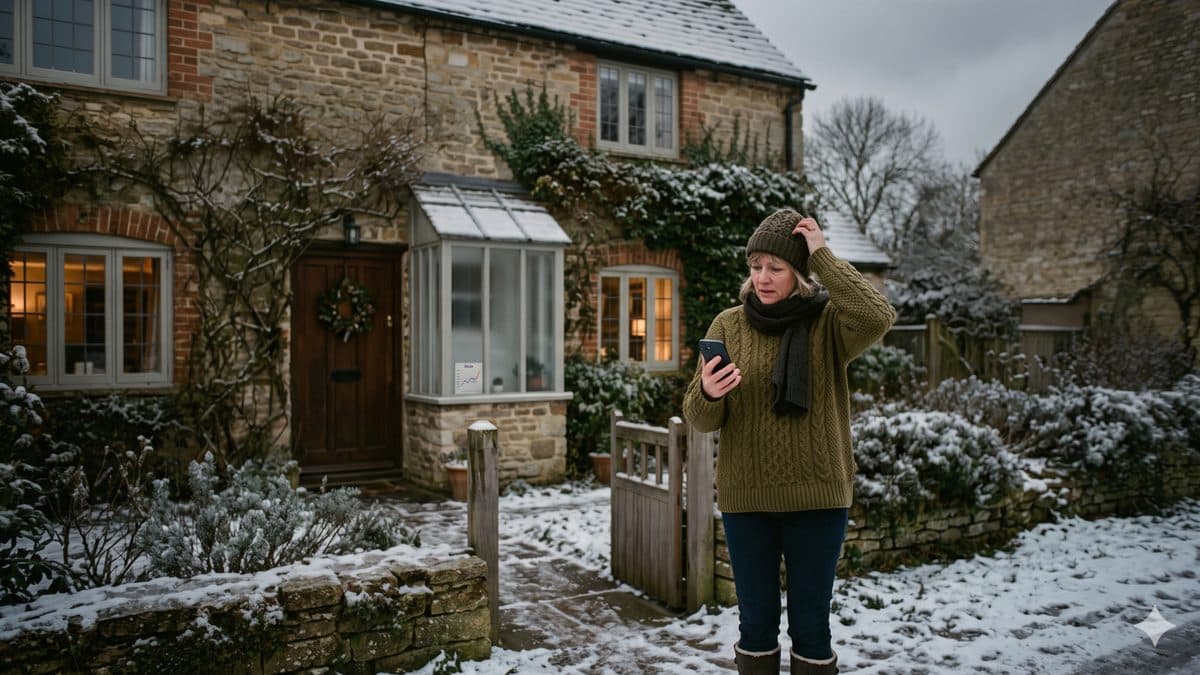
When you are browsing the UK property market, it is almost impossible to avoid looking at automated online valuations. You find a house you love, copy the address, and immediately check the portal's estimated price range. But if you are planning to make one of the largest financial investments of your life, you need to understand exactly how accurate a Zoopla estimate really is before you base your negotiation on it.
The math behind the computer algorithm
Automated valuation models work by analyzing vast sets of historical data. They look at past sales registered with HM Land Registry, track regional property price trends, and cross-reference the number of bedrooms or square footage listed in previous estate agent adverts. If three semi-detached houses on a street sold for four hundred thousand pounds last year, the algorithm assumes the fourth house is worth a similar amount today.
This statistical approach works well for generating a broad, bird's-eye view of a neighborhood. It gives a useful starting point for casual browsing. However, an algorithm is fundamentally blind to the physical and micro-local realities of individual properties. A computer cannot look through the front window, walk the boundaries, or evaluate the unique variables that dictate a property's true market health.
Why broad data models miss the details
The primary limitation of an automated estimate is that it relies heavily on historical averages. It cannot account for the exact context of a specific home. Here are three critical areas where standard online algorithms frequently miss the mark:
Internal condition and structural investments
If a homeowner spent fifty thousand pounds installing high-efficiency insulation, premium heat pumps, or pristine extensions, the algorithm rarely knows unless a new public EPC record or planning portal updates it accurately. Conversely, if a house has been neglected for a decade and requires major structural remediation, the algorithm still prices it based on its pristine neighbors.
Hyper-local market temperature
Property markets can change rapidly within individual postal sectors. A street that was highly desirable six months ago might experience a cooling off due to localized shifts, traffic changes, or upcoming developments. A broad algorithm smooths these fluctuations out, meaning it often lags behind real-time market shifts.
Hidden micro-local variables
Two houses built identical to one another on opposite sides of the same street can have vastly different true costs. One might sit directly in a localized flood risk pocket or a mobile coverage dead zone, while the other is completely unaffected. A generic automated model applies the same flat logic to both.
How to protect your wallet before making an offer
Using an online estimate as your sole guide when making an initial offer puts you at a severe disadvantage. If the estimate is too high, you risk overpaying by thousands of pounds. If it is too low, your offer might be instantly rejected by the estate agent, causing you to lose out on a home you genuinely wanted.
To protect your hard-earned money, you need to look past the macro estimates and focus entirely on the property's specific profile. You need a single-page breakdown that combines raw transaction histories, neighborhood environmental registers, and real-time market temperature into a realistic baseline. Don't base your life savings on a generic algorithm. Take a moment to see the actual records associated with the address before you sign any paperwork.